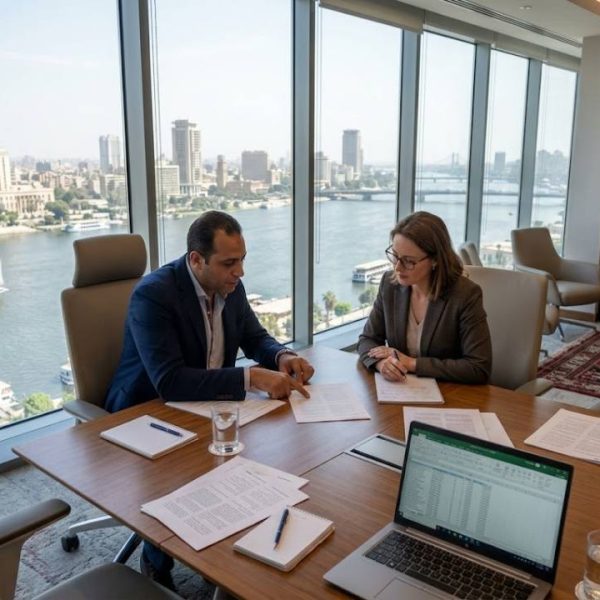
Egypt is one of the most attractive markets in the Middle East and Africa. It has more than 100 million people, a strategic position between continents, the Suez Canal and a growing number of economic zones that welcome foreign investors. Every year, European, Asian and American companies set up offices, factories and partnerships in Cairo, Alexandria and the new administrative capital.
What many of them underestimate is the paperwork. Almost every step of entering Egypt involves documents that must be translated, and often certified, before an authority will accept them. Planning for this early can save weeks of delay.
Why translation is part of market entry
Arabic is the official language of Egypt, and government bodies work in Arabic. English is widely used in business, especially in multinational firms, banks and the tourism sector, but official filings, court documents and many contracts still need an Arabic version.
That means a company coming from Germany, France or the United Kingdom will deal with at least two languages from day one, and often three. A reliable partner for business translation services helps keep these versions consistent, accurate and accepted by the people who need to read them.
Company registration documents
Setting up a legal entity in Egypt usually involves the General Authority for Investment and Free Zones. The GAFI website describes the investment framework, the types of companies foreign investors can establish and the services available through its investor centres.
Typical documents that foreign investors need to prepare include:
- the certificate of incorporation of the parent company
- articles of association or bylaws
- board resolutions approving the investment in Egypt
- powers of attorney for the local representative
- passport copies of directors and shareholders
Most of these must be legalised in the country of origin and then translated into Arabic. Requirements can change, so it is wise to confirm the current list with a local lawyer before starting.
Contracts and commercial agreements
Distribution agreements, joint venture contracts, lease agreements and supplier contracts are often drafted in English. When a dispute arises, however, an Egyptian court will work with an Arabic version. If the translation is unclear or inconsistent, the company may find itself arguing about wording instead of substance.
Bilingual contracts should state clearly which language prevails and should be translated by linguists who understand both legal systems. Egyptian law has its roots in civil law traditions, and some common law concepts have no direct equivalent.
Employment and HR documents
Hiring local staff brings another set of documents. Employment contracts, internal policies, health and safety rules and training materials should be available in Arabic so employees fully understand their rights and obligations.
For expatriate staff, the flow goes the other way. Degree certificates, professional licences, police clearance certificates and marriage or birth certificates for family members may be needed for work and residence permits. These usually require certified translation and sometimes legalisation.
Product documentation and labelling
Companies selling consumer goods, food, cosmetics, pharmaceuticals or medical devices face strict labelling rules. Product labels, instructions for use and safety data sheets often need Arabic text that matches the approved registration files exactly.
This is also where layout matters. Arabic reads from right to left, and text expansion or contraction can break a carefully designed label or brochure. Translation and desktop publishing should be planned together, not as separate steps.
Marketing and digital content
Egyptian consumers are active online, and social media plays a big role in purchasing decisions. Websites, apps and advertising campaigns that speak Egyptian Arabic, or a well-judged Modern Standard Arabic, perform far better than content translated word for word from English.
Localisation goes beyond language. Colours, images, humour, references to holidays such as Ramadan and Eid, and pricing formats all need attention. A campaign that works in London may feel distant or even inappropriate in Cairo.
Market entry on this scale is rarely a one-off project. Documents, campaigns and customer support all need attention month after month, often in several language pairs at once. Working with an experienced translation agency that already handles legal, technical and marketing content under one roof keeps that ongoing work coherent instead of fragmented across freelancers.
Choosing the right language partner
Not every translation provider can handle the full range of documents that a market entry involves. Legal, technical, financial and marketing texts each require different expertise. Before signing with a supplier, it is worth reading up on how to choose a translation supplier, from quality processes and specialist linguists to data security and turnaround times.
Useful questions to ask include:
- Do you work with native Arabic linguists who specialise in legal and business texts?
- Can you provide certified translations accepted by Egyptian authorities and foreign embassies?
- Do you offer Arabic desktop publishing for labels and brochures?
- How do you manage terminology across many documents and many months?
Planning ahead saves time
The most common cause of delay is not the translation itself but the sequence. Documents are legalised in the wrong order, translations are made before final versions are signed, or an authority rejects a file because the translator's certification does not meet its requirements.
A simple timeline helps. List every document needed, note which ones must be legalised, translated or both, and agree deadlines with your lawyer and language partner. Treat translation as part of the project plan, not as a last-minute task.
A market worth the effort
Egypt offers scale, a young workforce and access to regional markets. The administrative side can feel heavy at first, but it becomes manageable with good preparation. Companies that invest in accurate translation from the start build trust with authorities, partners and customers, and that trust pays off long after the first office opens its doors.